
sCCIgen, described in Genome Biology, introduces the first simulator capable of generating realistic, multi-layered virtual tissues that fully capture cell locations, gene activity patterns, and communication networks.
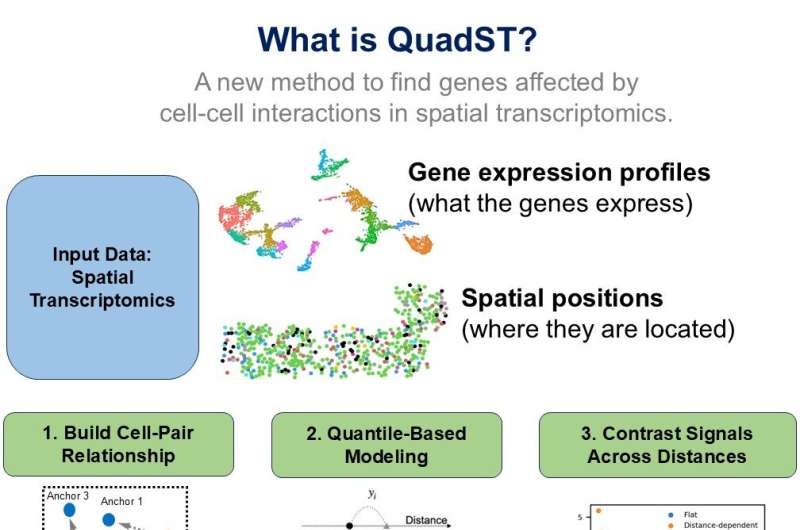
QuadST, detailed in Genome Research, showcases the tool’s ability to detect cell-to-cell communication signals directly from spatial transcriptomics data, revealing genes that change as cells interact in healthy and diseased tissues.
Cells constantly send and receive signals that help the body grow, stay healthy, and defend against threats. When these signals fail, disease often follows. For example, disrupted communication between nerve cells can lead to memory loss and cognitive decline, as seen in Alzheimer’s disease.