
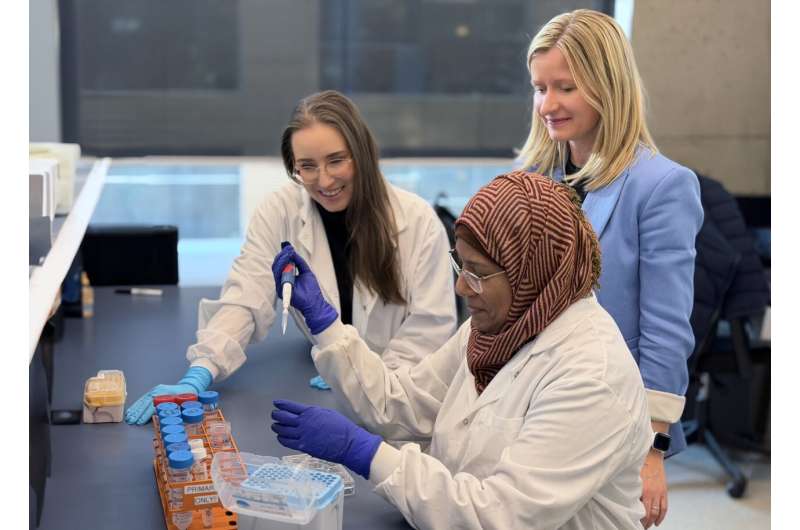
As outlined in a paper published in Cell Stem Cell, the breakthrough could lead to new treatments for a wide range of genetic skin conditions, from rare inherited diseases to more common disorders like eczema.
“With this work, we show that it is possible to correct disease-causing mutations in human skin using a topical treatment that is safe, scalable and easy-to-use,” said Dr. Sarah Hedtrich, an associate professor at UBC’s school of biomedical engineering and senior author of the study.
“Importantly, the approach corrects the root cause of disease, and our data suggests that a one-time treatment might even be enough to provide a lasting and durable cure.”