
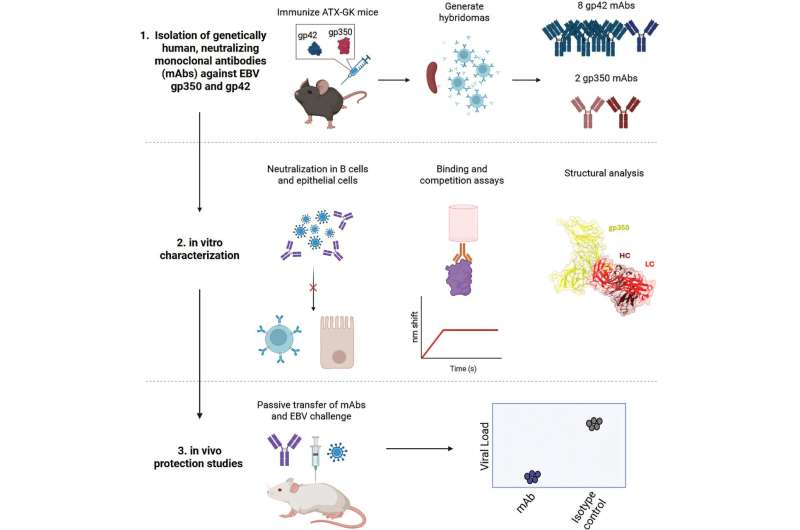
Published in Cell Reports Medicine, the study highlights one of the newly identified monoclonal antibodies that successfully blocked infection in mice with human immune systems when they were challenged with EBV.
“Finding human antibodies that block Epstein Barr virus from infecting our immune cells has been particularly challenging because, unlike other viruses, EBV finds a way to bind to nearly every one of our B cells,” explained Andrew McGuire, Ph.D., a biochemist and cellular biologist in the Vaccine and Infectious Disease Division at Fred Hutch. “We decided to use new technologies to try to fill this knowledge gap and we ended up taking a critical step toward blocking one of the world’s most common viruses.”