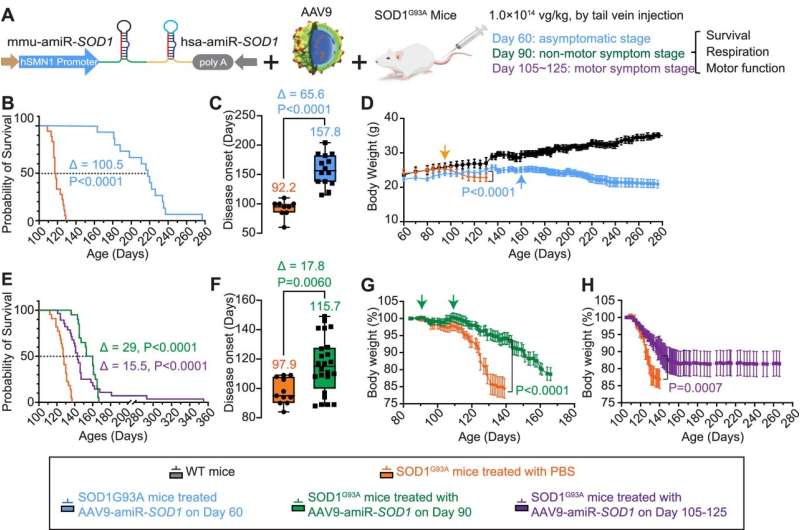
The gene therapy, delivered via an adeno-associated virus (AAV) vector, preserved motor neurons and maintained neuromuscular connections in treated animals. This translated into improved muscle and respiratory function, motor performance and lifespan in preclinical studies. These findings, published in Nature Communications, have the potential for clinical application in patients with SOD1-caused ALS, as well as other neurodegenerative diseases caused by toxic, gain-of-function gene mutations.
