
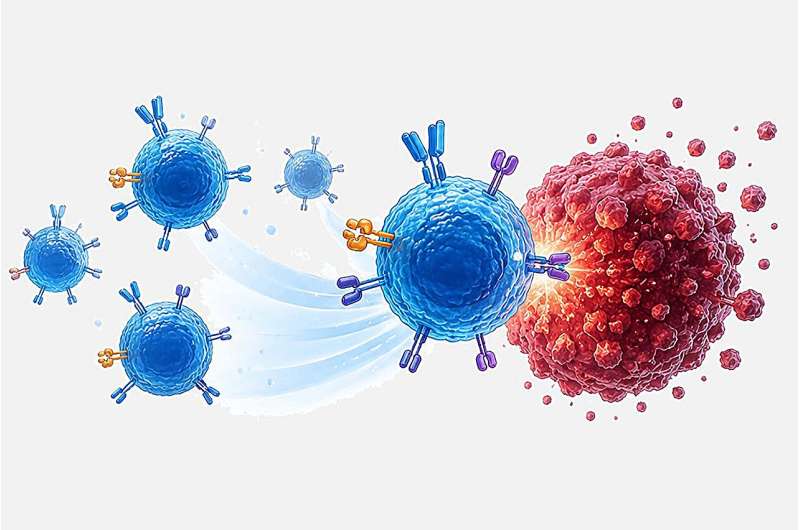
This ability gives TCR therapy access to a much wider range of cancer targets—a big deal for solid tumors, since most of what makes those cells cancerous is hidden inside them, not on the surface.
But there’s a bottleneck: In currently available approaches, each dose has to be custom-made from a patient’s own T cells, a process that can take weeks and cost well into the six figures. Researchers have also explored engineering donor-derived T cells instead, which could be manufactured in advance and used off the shelf for many patients. But this method is largely limited because it carries the risk of graft-versus-host disease, a dangerous condition in which transplanted immune cells attack healthy tissues.