
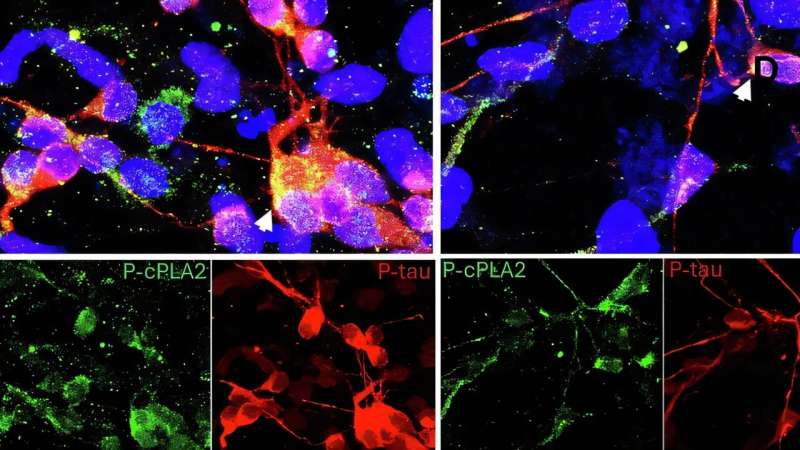
The driver is an enzyme called calcium-dependent phospholipase A2 (cPLA2). The team discovered its role in brain inflammation by studying people who carry the APOE4 gene—the strongest genetic risk factor for Alzheimer’s disease. While many people who have the APOE4 gene don’t develop the disease, those with elevated levels of cPLA2 generally do.
The problem is that cPLA2 is also essential for normal brain function, so any potential drug molecule would need to inhibit the enzyme’s activity without eliminating it. The molecular candidate would also need to be small enough to cross the blood brain barrier to be effective.