
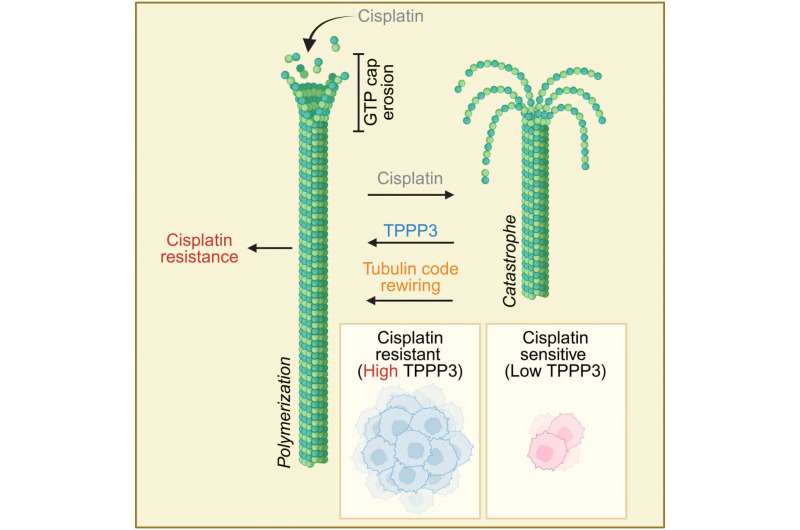
The findings, published in Cell Reports, center on cisplatin, a widely used chemotherapy drug first discovered at MSU in 1965 and still considered among the gold standards for treating ovarian and other cancers.
It’s long been understood that cisplatin works by damaging cancer cells’ DNA, but this study shows that it also disrupts microtubules, which are the internal scaffolding cells rely on to survive.
“We have learned how cancer cells adapt to chemotherapy by altering their internal structure,” said Sachi Horibata, assistant professor in the Precision Health Program and Department of Pharmacology and Toxicology at the MSU College of Human Medicine and one of the lead researchers on the study. “This enables them to survive and ultimately resist treatment.”