
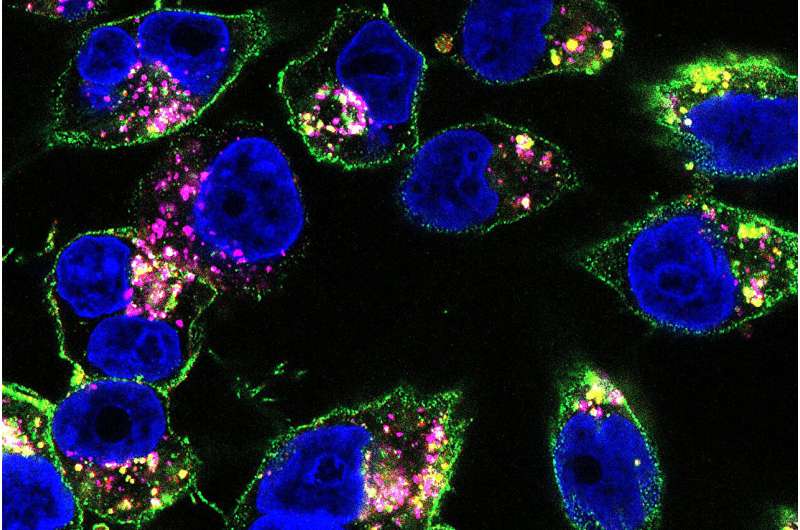
Researchers at Washington University School of Medicine in St. Louis have shown in mice that it is possible to increase the potential effectiveness of these drugs, known as antibody-drug conjugates. By modifying drugs already approved by the U.S. Food and Drug Administration so they self-assemble in the body and attack more than one cancer target, the researchers dramatically improved the medications’ effectiveness.
The study was published in Nature.
“We’ve shown that when two cancer-targeting antibodies bind together inside the body, they accumulate at the tumor more effectively and improve treatment response,” said Patrícia M. Ribeiro Pereira, Ph.D., an assistant professor of radiology at WashU Medicine Mallinckrodt Institute of Radiology and a research member of Siteman Cancer Center, based at Barnes-Jewish Hospital and WashU Medicine.