
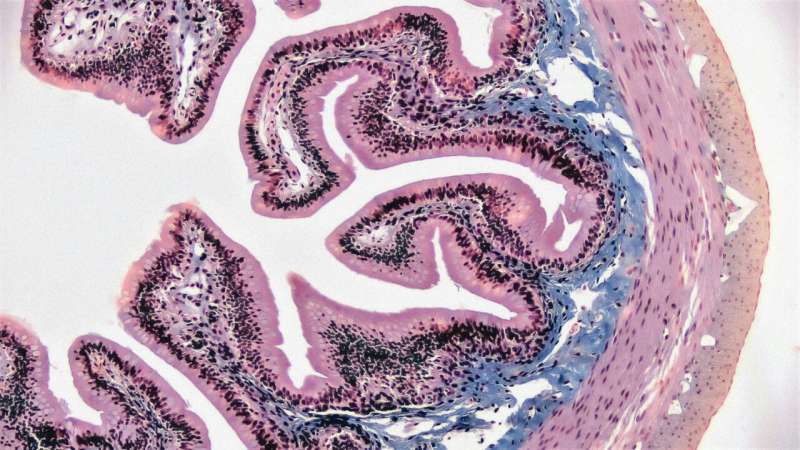
Led by Declan McCole, a professor of biomedical sciences in the School of Medicine, the studies show that when PTPN2 does not function properly, the gut becomes more vulnerable to infection and inflammation.
People with IBD often have higher levels of AIEC, a harmful type of E. coli bacteria. AIEC can attach to the gut lining, invade gut cells, damage the gut’s protective barrier, and worsen inflammation.
Normally, PTPN2 helps maintain gut health by controlling inflammation and supporting a balanced gut microbiome. However, some people with IBD carry a faulty version of this gene, which reduces PTPN2 activity. When PTPN2 is impaired, the balance of gut bacteria is disrupted, making the gut more susceptible to harmful microbes.