
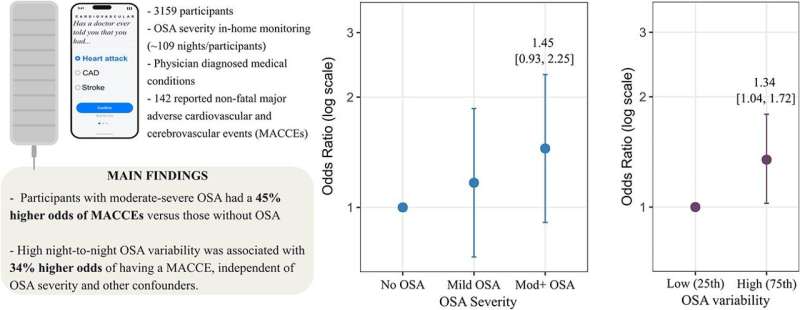
Obstructive sleep apnea causes repeated pauses in breathing during sleep and affects millions of people worldwide. It is commonly associated with loud snoring, restless sleep, and daytime fatigue, but it is also closely linked to heart disease and stroke. Most people tested for sleep apnea only have their breathing measured on one night, and this single snapshot may not be representative in people whose condition varies substantially night-to-night.
The study analyzed sleep data from more than 3,000 adults who tracked their breathing at home using an under-mattress sensor. Their sleep patterns were measured over several months and compared with reported heart and stroke conditions.