
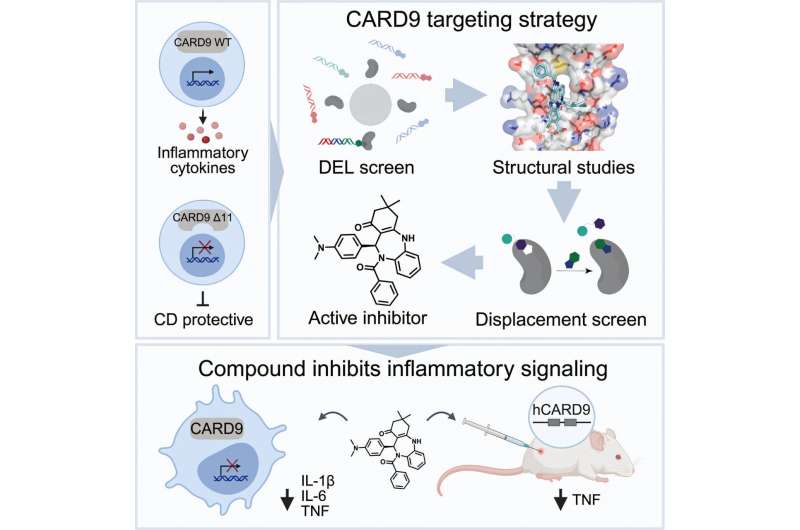
Now, researchers at the Broad Institute, Mass General Brigham, Harvard Medical School, and Johnson & Johnson Innovative Medicine have developed small-molecule drug candidates that mimic the effects of this rare gene variant and could potentially treat Crohn’s and other inflammatory bowel diseases.
The protective CARD9 variant was first identified by Broad researchers in 2011, who then discovered in 2015 how it worked to reduce IBD risk. The new study, published in Cell, reveals a set of molecules that have the same effect as the protective variant and decrease sustained inflammation in mice.
The work demonstrates a complete genetics-to-therapeutics pipeline—from the initial discovery of a protective gene variant to the design of molecules that reproduce its beneficial effects.