
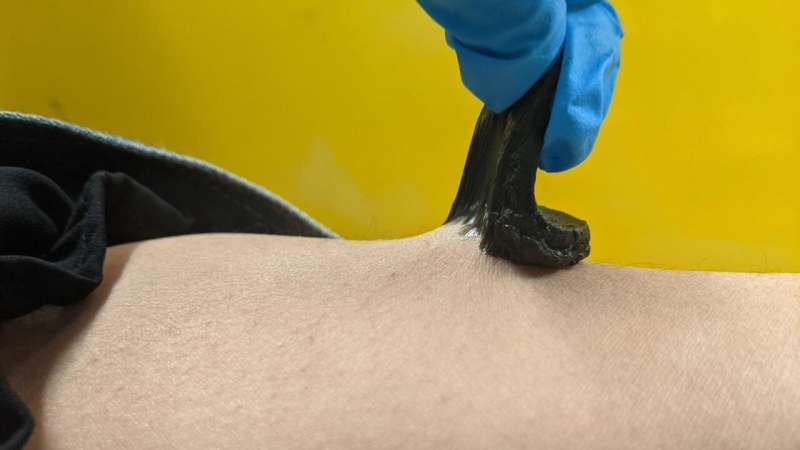
Researchers from Drexel University and Penn State University took on the challenge of improving the hydrogel material used in biosensors. In recently published research, they reported a new formula for making the gelatinous substrate that is versatile, durable and adhesive enough to make a stronger connection.
According to the researchers, in addition to regular movement, like flexing or stretching, surface obstructions such as moisture, grease or hair are the biggest impediments to biosensors remaining affixed to the body and picking up the biological signals they’re designed to detect. Reported in the journal Science Advances, their hydrogel is formulated to adhere to skin through hair and sweat and keep its hold through physical activity.