
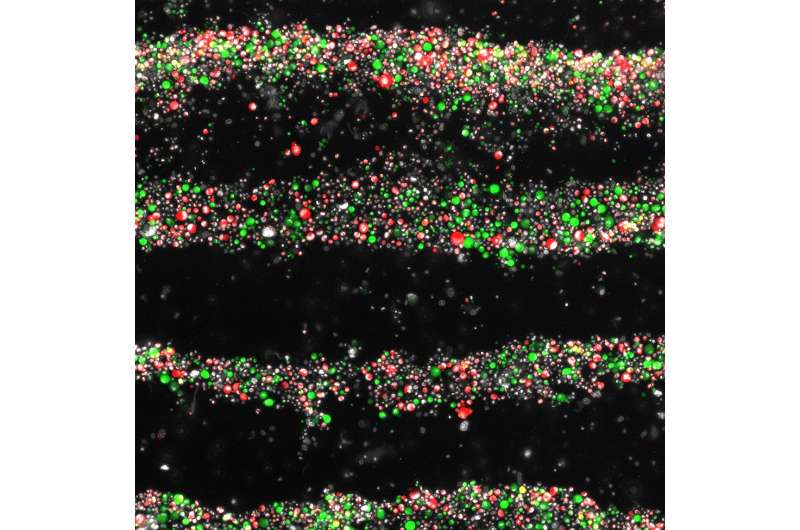
The studies by the Heidelberg researchers show how cells “in culture” can be precisely arranged in space using sound waves. This acoustic structuring also influences cellular development over time. According to Campos, the cells in the experiments formed self-organizing networks within a week and produced their own supporting extracellular matrix. In addition, they activated genes associated with blood vessel formation. The findings are published in the journal Advanced Science.
Pattern quality shapes tissue maturity
“In our investigations, we found a clear connection between the quality of the original acoustic pattern and the maturity of the emerging tissue structures. This shows that the formation of engineered tissue can be actively steered with the help of acoustic manipulation,” said the scientist, who heads the research group “Bioprinting for tissue and organ engineering” at the Center for Molecular Biology of Heidelberg University (ZMBH).