
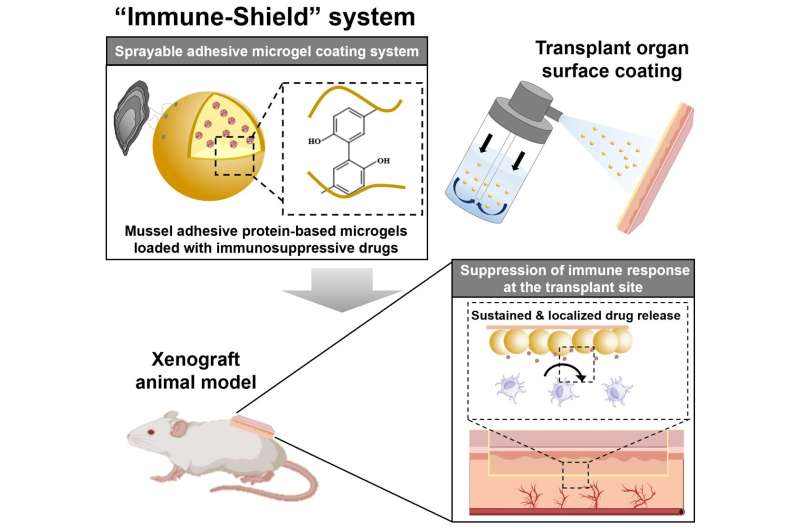
Organ transplantation is the most effective treatment for restoring organs damaged by accidents or diseases. However, there is a critical global shortage of transplantable organs. While xenotransplantation—the transplantation of animal organs into humans—has gained attention as an alternative, immune rejection remains a major challenge, as the human immune system recognizes transplanted organs as foreign invaders.
To prevent this, patients must continuously take immunosuppressants. However, oral or injection-based administration distributes the drugs throughout the body, which can lead to serious side effects such as kidney toxicity and increased risk of infection. This paradoxical situation repeats itself: drugs intended to preserve organs actually weaken the patient’s immune system.