
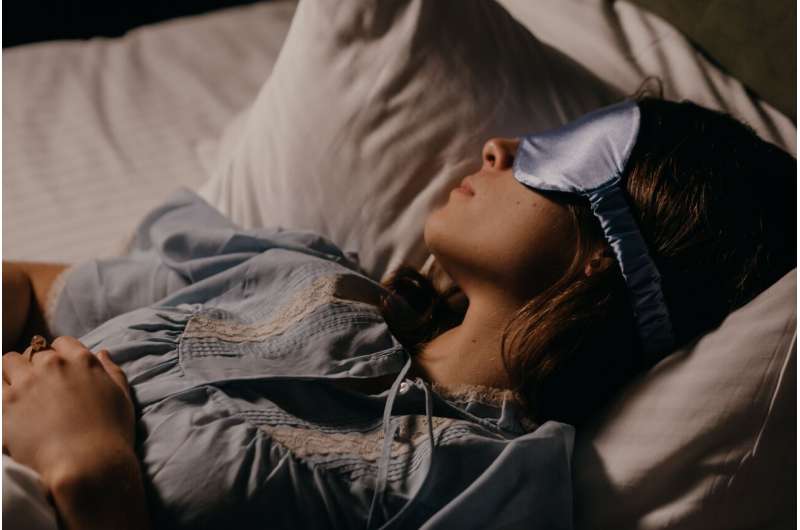
The device is “using information in real time to actually personalize, optimize and improve sleep as a controllable biological system,” Coon says. That approach borrows from a familiar model: “We’re developing foundation models [and] frontier models that are assessing brain signals the same way that LLMs assess language signals.”
Sleep staging from a forehead patch
Getting there meant first determining how to accurately measure the brain’s sleep signals without a clinic full of equipment. The clinical gold standard, polysomnography, requires a technician to place sensors across the scalp, then spend 30 minutes manually classifying the signals into sleep stages. This process is governed by scoring rules written in the 1950s and capped at roughly 85% accuracy.