
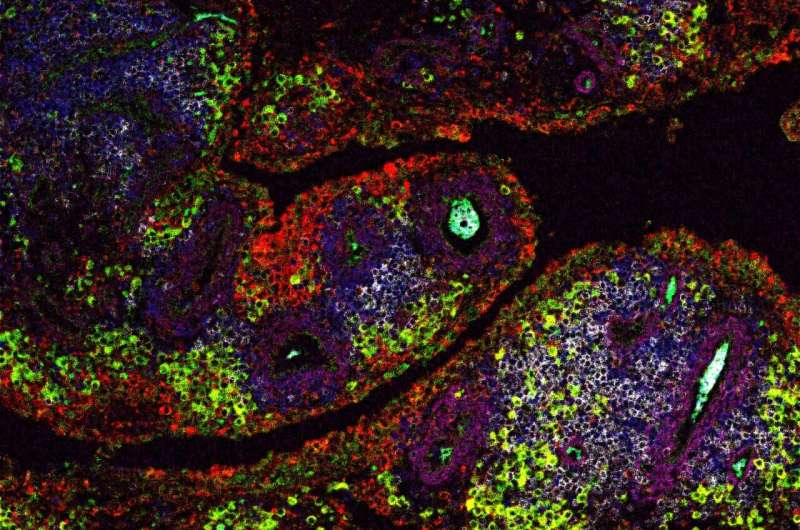
The team focused on the synovial membrane, the tissue lining the inside of joints that plays a central role in inflammatory processes. Within cells, the endoplasmic reticulum acts as a factory responsible for protein production and quality control. When exposed to prolonged stress, particularly in an inflammatory environment, certain proteins known as ER chaperones are produced in larger amounts to help cells maintain their functions despite adverse conditions.
By analyzing tissue samples from patients with osteoarthritis (OA), rheumatoid arthritis (RA) and other inflammatory arthropathies, the researchers mapped, for the first time, the localization of 11 ER stress proteins directly within human joint tissues. They found that the abundance of these proteins increases as inflammation progresses and that they are closely associated with specific populations of fibroblast-like synoviocytes (FLS), cells involved in tissue remodeling and joint damage.