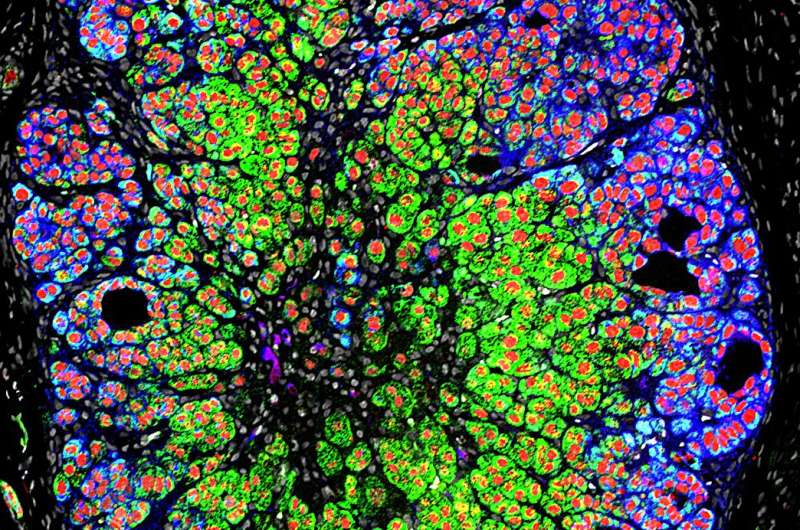
Stress tested, testing stress: Novel organoid models how the adrenal gland develops

Sitting above each kidney are two small endocrine glands about the size of walnuts. These are the adrenal glands, responsible for producing hormones that help control some of the body's most critical functions. Among these hormones, cortisol is particularly critical for survival. Often referred to as the "stress hormone," it helps the body adapt to a wide range of challenges—both emotional and physical, such as trauma or infection—by regulating overall metabolism. Despite its central role in stress and endocrine biology, how the adrenal gland is built and how it functions remains poorly understood.

Now, researchers led by Kotaro Sasaki and Michinori Mayama of the School of Veterinary Medicine have developed a lab-grown organoid system that recapitulates the complex tissue structure, development, and function of the developing human adrenal cortex—the outer layer of the adrenal gland—providing a powerful platform to study its biology. These results, published in Cell Stem Cell, help establish a foundation for regenerative therapies targeting adrenal diseases.

Sign up for Blog Updates