
High blood pressure, formally known as hypertension, is a leading cause of heart disease in the United States, impacting nearly half of all adults. Approximately 1 in 10 of these patients experience drug-resistant hypertension that can be difficult to address.
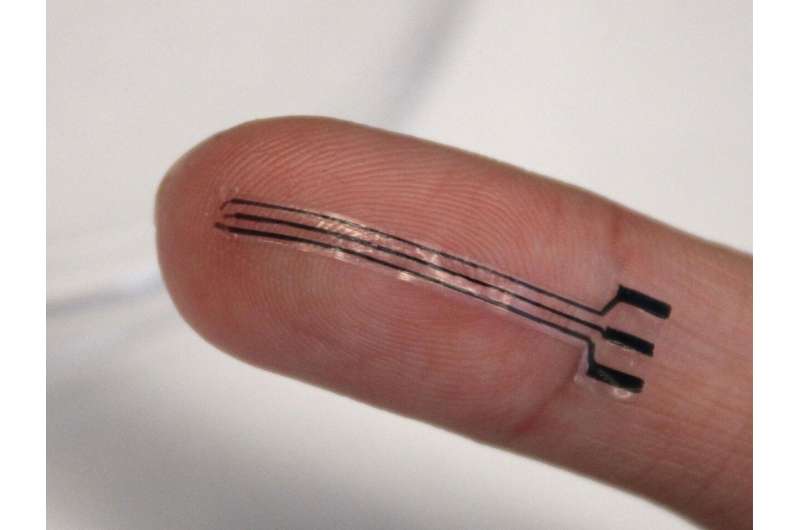
The team developed a new class of 3D-printed bioelectronics made of soft, stretchy materials, as well as an adhesive component that helps the device painlessly stick to biological tissue. The team reported that their new design, which they call CaroFlex and tested in a rodent model, relieved hypertension while causing much less damage to surrounding tissue. They detailed their work in a paper recently published in Device.
According to corresponding author Tao Zhou, Wormley Family Early Career Assistant Professor of Engineering Science and Mechanics, hypertension can traditionally be treated with different drugs and changes to lifestyle or diet. However, drug-resistant hypertension is a pervasive, often chronic condition that does not respond as well—if at all—to conventional treatments.