
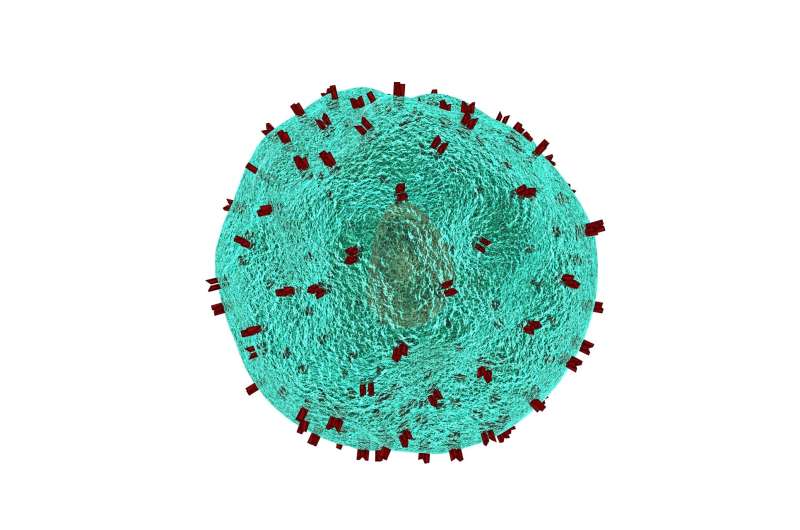
Developing effective immunotherapies for acute myeloid leukemia (AML) has long been hampered by a critical challenge: Therapy directed at killing the leukemia cells may also harm the body’s ability to make new, healthy blood cells. This happens because most of the proteins that can be targeted on the surface of the blood cancer’s cells are also found on vital blood-forming cells.
Antibodies are immune proteins that recognize and attach to threats. These antibodies target U5 snRNP200, a protein usually found inside a cell’s nucleus but that unexpectedly appears on the surface of leukemia cells in about half of all AML patients.
The team’s findings, conducted in animal models, are published in Cancer Discovery.
The work was led by leukemia specialist Anthony Daniyan, MD, and Omar Abdel-Wahab, MD, Chair of the Molecular Pharmacology Program at MSK’s Sloan Kettering Institute. The study’s first authors were postdoctoral fellow Takeshi Fujino, MD, Ph.D., and medical student Jennifer Lewis, both members of the Abdel-Wahab Lab.