
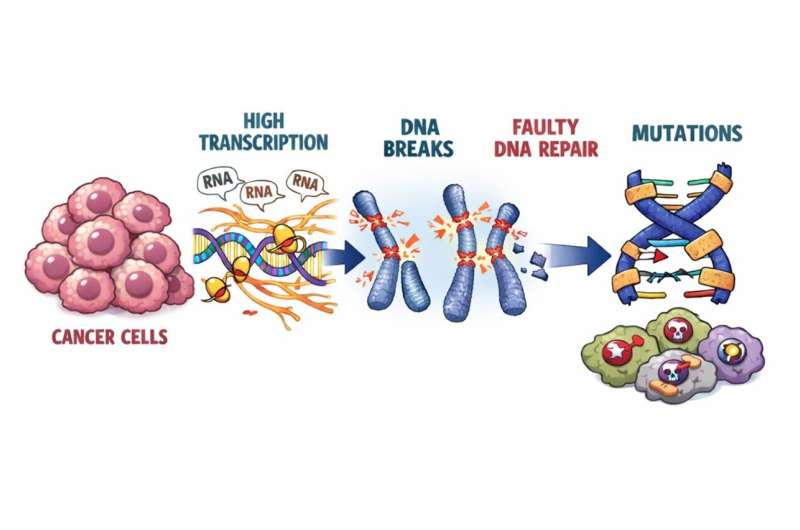
Cancer cells can often repair this damage, but the process is frequently error-prone. The repeated cycle of breaking and repairing can make these regions more prone to accumulating mutations over time. In short, the same mechanisms that help cancer grow quickly may also make its DNA more fragile, helping explain how tumors continue to evolve and, in some cases, become more aggressive over time.
Cancer cells grow by turning certain genes on at extremely high levels, especially genes that help them multiply. But a new study suggests that this frantic activity comes with a cost: it can physically damage the cell’s DNA.
The research, published in Science Advances, was led by Ph.D. student Osama Hidmi under the guidance of Prof. Rami Aqeilan of the Hebrew University of Jerusalem and reveals an overlooked source of genetic instability in cancer.