
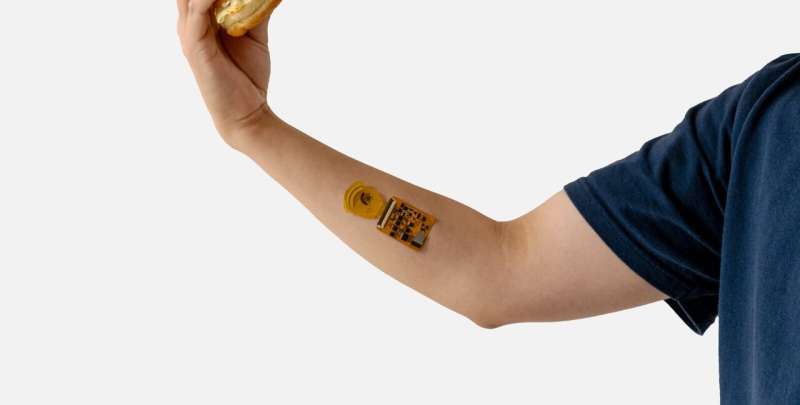
The new noninvasive sensor uses machine learning to estimate levels of lipids in the blood based on what is measured in sweat. The relationship between lipids in sweat and lipids in blood is not linear—a plot of the relationship between measurements and what is found in the blood does not follow a straight line. The causal machine learning model takes into consideration various physiological factors that might affect those sweat measurements, such as body mass index (BMI), sex and how much a person is sweating, to produce an estimate of blood lipid levels.
“Together, the sweat measurement and the causal machine learning model can predict the blood level with high accuracy,” says Gao, who is also a Heritage Medical Research Institute Investigator.