
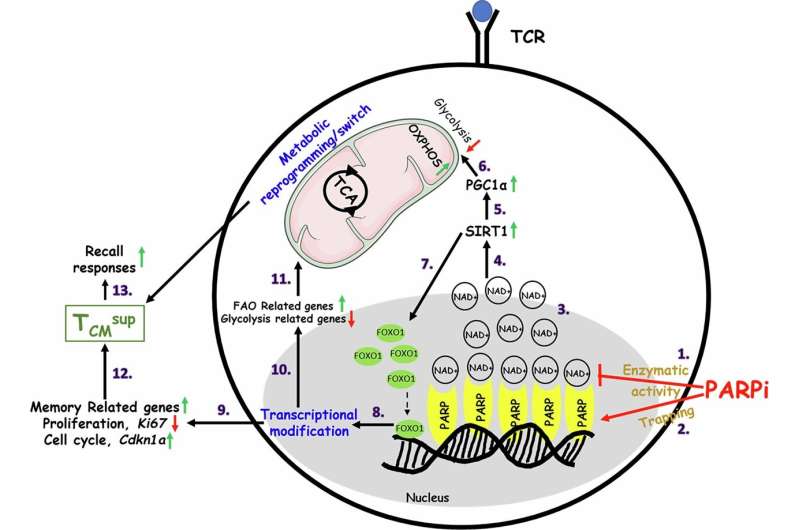
The finding, published January 12, 2026, in Nature Immunology, amplifies a known strategy of blocking the cellular activity of PARP, an enzyme that detects DNA abnormalities in cells and repairs them.
“This opens the door to a new area of research in understanding how our immune system works, and as importantly, it opens the way for the development of new strategies for the treatment of cancer,” says Samir N. Khleif, MD, director of The Center for Advanced Immunotherapy Research and the director of Loop Immuno-Oncology Research Laboratory at Georgetown’s Lombardi.
How PARP inhibitors enhance T cells
When PARP functions in overdrive it helps fuel cancer growth and drugs used to block PARP are called PARP inhibitors. Georgetown researchers found that inhibiting PARP with such drugs in a key group of immune cells, called CD8 T cells, can significantly enhance the function of these cells and boost the body’s immune response against tumors.