
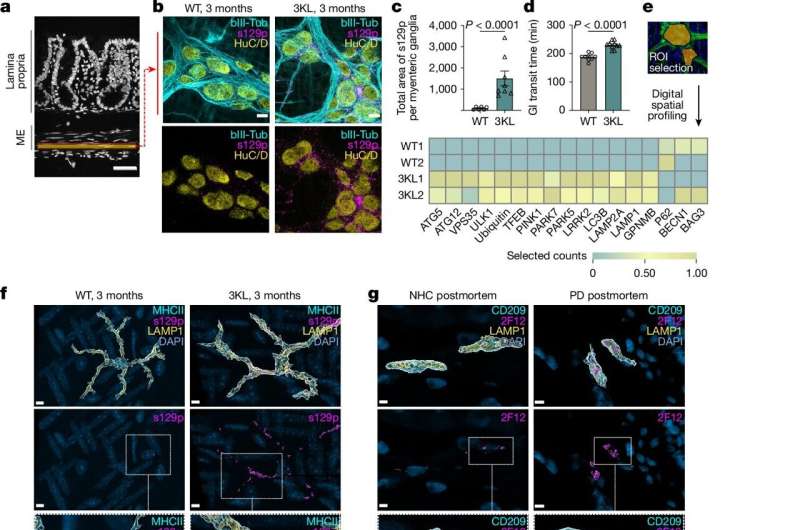
Scientists have long theorized that Parkinson’s may start in the gut. This is because one of the first brain areas to be affected by the condition is the dorsal motor nucleus of the vagus nerve, which connects directly to the gut. But scientists have not known how the condition spreads to the brain.
Immune cells help toxic proteins travel
The new study identifies a key role for gut macrophages—a specialized immune cell that acts as a first responder, eating or “engulfing” and destroying harmful invaders—in helping toxic proteins travel from the gut into the brain.