
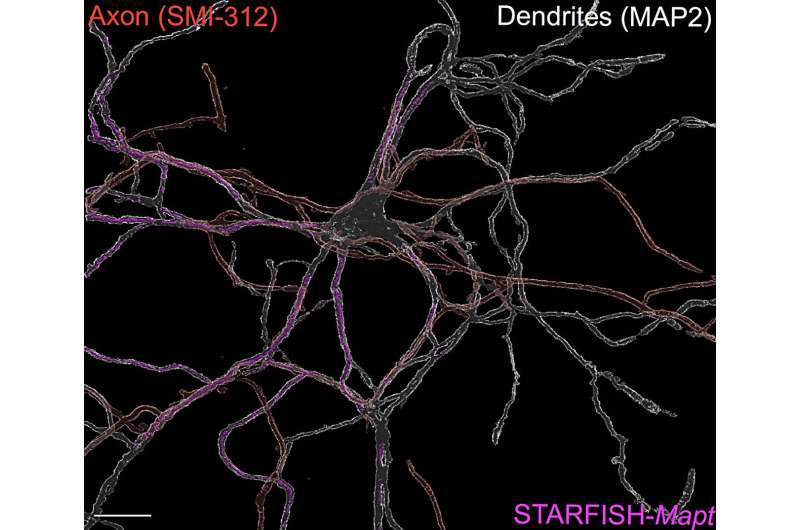
The study reveals a previously hidden first chapter in the life of tau: its unexpected birthplace in dendrites, the branching extensions that neurons use to receive signals from other cells. The study also identifies a rapid quality-control process that destroys a substantial fraction of new tau and may help explain how normal tau takes a pathological turn.
These findings run counter to decades-old assumptions about the first steps of tau pathology in Alzheimer’s disease.
“If we want to stop tau pathology before tangles form, we need to understand the first moments of tau’s life,” says the study’s senior author, Kapil Ramachandran, assistant professor of neurology and neuroscience at Columbia University’s Vagelos College of Physicians and Surgeons and Taub Institute for Research on Alzheimer’s Disease and the Aging Brain.