
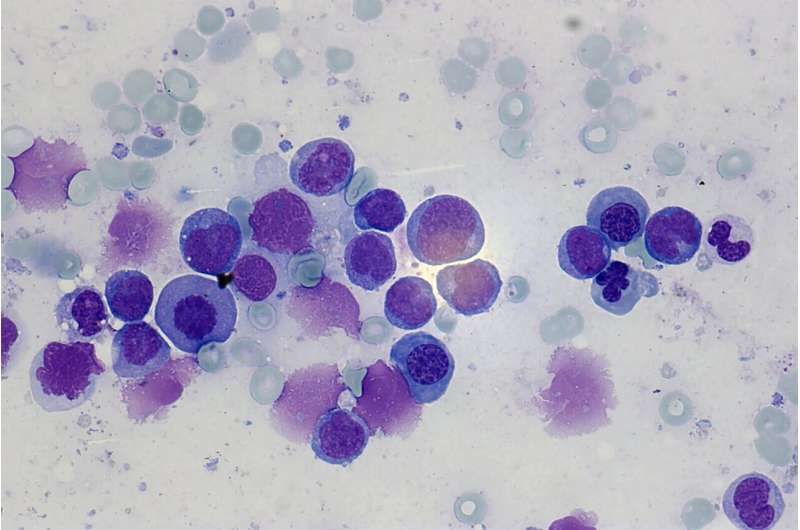
In people with the disease, however, these cells exhibit genetic alterations that cause them to multiply uncontrollably in the bone marrow, where they increasingly displace the healthy blood cells. This ultimately impairs the vital functions of the hematopoietic system. The causes of the disease have not yet been fully elucidated and may be linked to various genetic changes, some of which can be acquired over the course of a person’s life.
Researchers from the Faculty of Medicine at Kiel University, the Department of Internal Medicine II—Hematology and Oncology at the UKSH, Campus Kiel, the Institute of Human Genetics at UKSH, Campus Lübeck, the Institute of Medical Genetics and Human Genetics at Charité—Universitätsmedizin Berlin, and the Max Planck Institute for Molecular Genetics in Berlin/Dahlem have now published a joint paper that investigated how two common alterations in regulatory genes—mutations in IDH1 and DNMT3A—influence the three-dimensional organization of the genome in leukemia cells.