
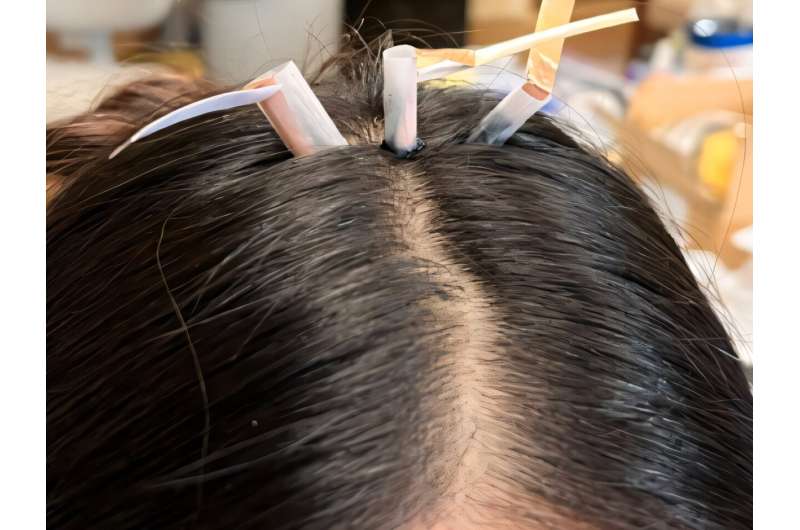
A vital tool for health care practitioners, electroencephalography (EEG) systems measure electrical activity in the brain through electrodes placed on the scalp, but getting reliable readings can be surprisingly difficult. Hair interferes with contact between the electrodes and skin, and the gels used to improve those connections often dry out over time, weakening signal quality.
The researchers said the technology could improve wearable brain-monitoring systems and eventually help create more natural touch experiences in virtual reality, prosthetic limbs and other human-computer interfaces. They published their work in Science Advances.
The team demonstrated that the biogel maintained stable performance across different hair types for multiple days, outperforming conventional EEG gels that degrade more quickly as they dry out. The team also showed that the material could support brain recordings during both natural touch sensations and electrically stimulated artificial touch.