
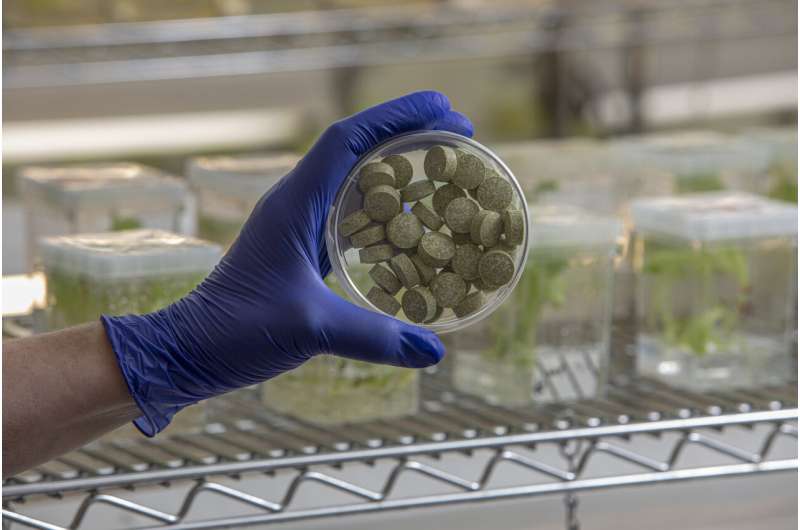
HNSCC is a common cancer that develops in the lining of the mouth and throat. It can be aggressive and often has poor outcomes, especially when diagnosed at advanced stages, says Daniell. He notes that most recently approved cancer drugs have not significantly improved quality-of-life or five-year survival rates, underscoring the need for better therapies.
Building from their previous work using a chewing gum made from lablab beans (bean gum) containing the naturally antiviral protein FRIL, Daniell and colleagues examined the levels of three microbes linked to cancer—human papilloma virus, or HPV, and two species of bacteria, Porphyromonas gingivalis (Pg) and Fusobacterium nucleatum (Fn)—in oral samples from patients with HNSCC.