
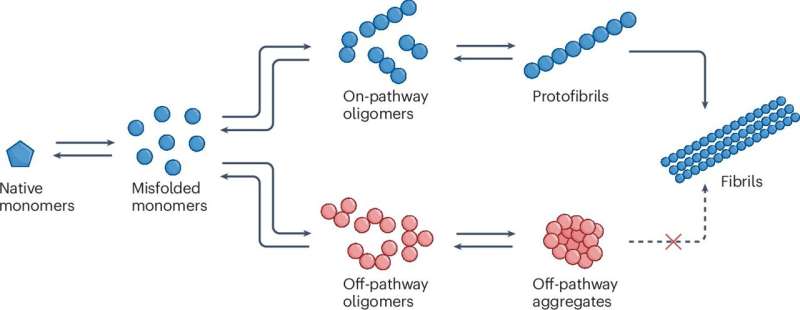
Protein-misfolding diseases include many difficult-to-cure diseases, such as Alzheimer’s disease, Parkinson’s disease, Huntington’s disease, ALS and even type 2 diabetes.
A new review by researchers from the University of Southern Denmark and Kent State University suggests that future breakthroughs in treating protein-misfolding diseases may come from targeting tiny protein aggregates known as oligomers, which form early in the disease process. They are increasingly believed to drive cellular damage.
The review is published in Nature Reviews Chemistry. The authors are postdoctoral researcher Pernille Vosbein and associate professor Chenguang Lou from the Department of Physics, Chemistry and Pharmacy at the University of Southern Denmark, and professor Hanbin Mao from the Department of Chemistry and Biochemistry at Kent State University.