
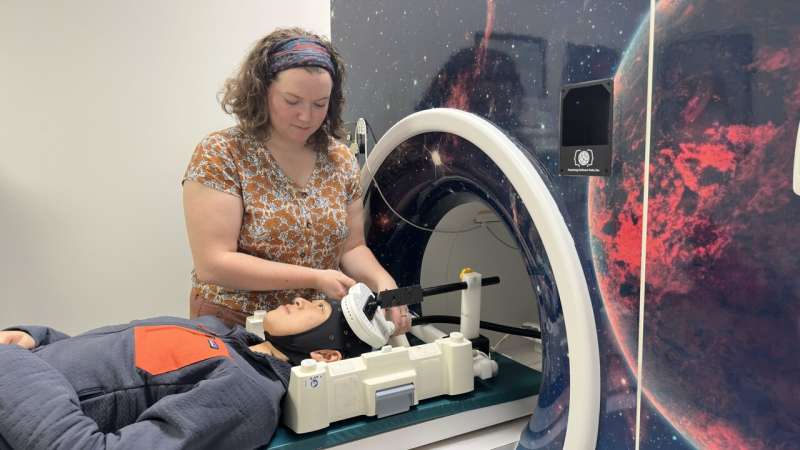
The study, published recently in Nature Communications, used innovative, concurrent brain stimulation and recording techniques in people to provide direct human evidence that noninvasive transcranial magnetic stimulation (TMS) can reliably engage and modulate activity in the hippocampus.
The hippocampus is a deep brain region that plays a critical role in multiple brain functions, such as memory and emotion. Problems with hippocampal function have been implicated in several neurological and neuropsychiatric conditions, including Alzheimer’s disease, depression, anxiety, and post-traumatic stress disorder (PTSD).
“The idea of manipulating neural activity in the hippocampus to help treat these types of conditions is appealing, but because the hippocampus lies so deep inside the brain, the challenge is how to engage these brain cells without using invasive implants or drugs that are not precisely targeted,” says senior study author Jing Jiang, Ph.D., UI assistant professor of pediatrics.