
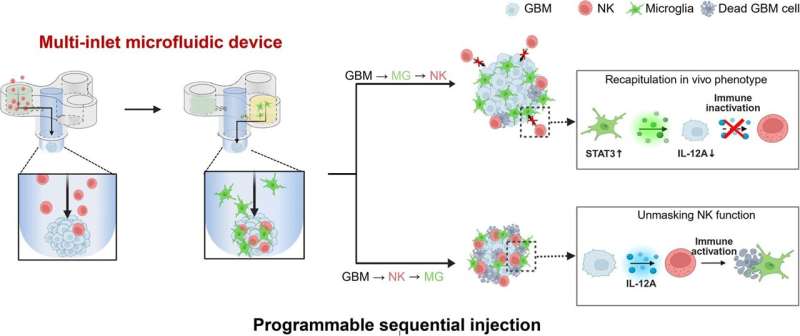
The findings, published in the journal Neuro-Oncology, reveal the importance of timing in tumor-immune interactions and suggest a new strategy for optimizing personalized cancer immunotherapy.
A timing problem inside tumors
Glioblastoma (GBM), one of the most lethal brain tumors, is characterized by a strongly immunosuppressive microenvironment driven in part by the extensive infiltration of microglia, the brain’s resident immune cells.
Consequently, natural killer (NK) cells, which directly attack cancer cells, have limited ability to penetrate the tumor, reducing their therapeutic effectiveness. Conventional static cell culture models also have limitations in capturing the dynamic, time-dependent interactions between immune cells and tumor tissue.