
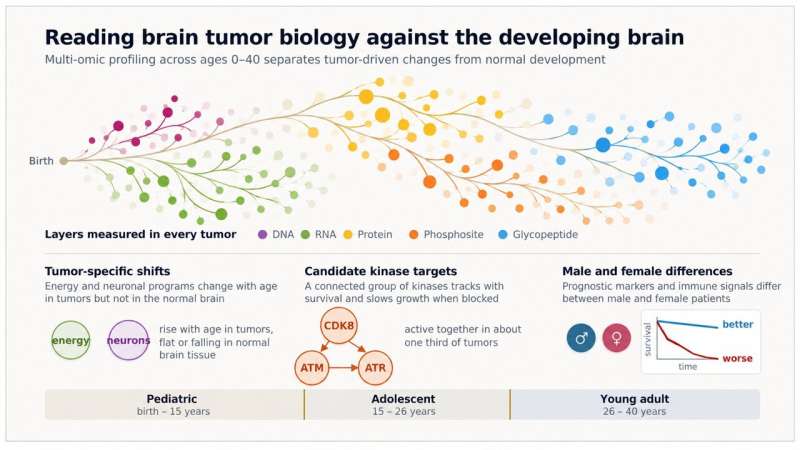
The study found that high-grade glioma varies by developmental stage and sex, showing distinct tumor biology and outcomes across patient groups. Using this information to guide clinical trial design and develop new therapies could advance more precise treatment strategies.
The study was conducted by the Clinical Proteomic Tumor Analysis Consortium (CPTAC) of the National Cancer Institute (NCI), the Children’s Brain Tumor Network and the Philadelphia Coalition for a Cure. The findings were published in Cell Reports Medicine.
High-grade glioma is among the most aggressive primary brain tumors, with a five-year survival rate below 10%. Tumors in children differ markedly from those in adults, while adolescents and young adults remain especially understudied because their tumors do not fit neatly into either pediatric or adult disease.