
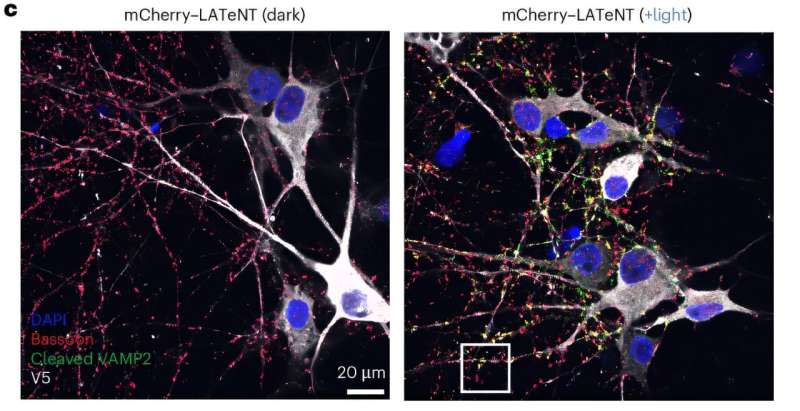
The technology is expected to be widely applicable to life sciences and medical research, including elucidating the pathogenic mechanisms of brain disorders and regulating insulin secretion.
Synapses are the primary sites of connection through which neurons exchange information. Dysfunction of synaptic signaling can cause a wide range of neuropsychiatric disorders, including anxiety disorders, depression and autism spectrum disorder.
Conventional optogenetic technologies have largely been limited to controlling the electrical activity of neurons, with technical limitations in suppressing signal transmission at specific synapses for extended periods while allowing it to be fully restored afterward.