
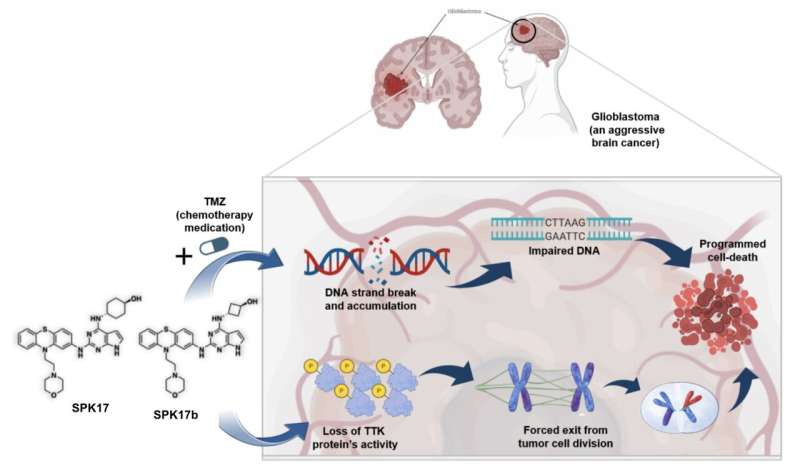
Research from the Indian Institute of Technology Gandhinagar (IITGN) explores one such possibility of tackling drug-resistant glioblastoma. It highlights two promising candidates that can target tyrosine threonine kinase (the TTK or Mps1 protein), which is integral to cell division. High levels of this protein have been linked to glioblastoma progression. The results have been published in the Journal of Biological Chemistry and RSC Medicinal Chemistry.
Interrupting the quality control inspector
Biological cells have tightly regulated systems for distributing genetic material. TTK helps manage one of the checkpoints, and its job is to ensure that chromosomes are properly handled as a cell divides. Upon spotting a mistake during cell division, TTK triggers a safety alarm that causes the process to pause while the repair takes place. Once everything is in the right place, TTK gives the green light, and the cell divides successfully.