
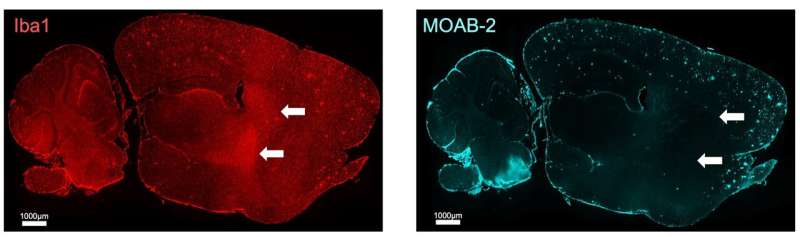
In a study published in the journal Alzheimer’s & Dementia, a team led by Shannon L. Macauley, Ph.D., an associate professor of physiology in the UK College of Medicine, and first author Nicholas J. Constantino, Ph.D., a recent UK doctoral graduate, revealed that microglia are the primary drivers of sleep loss. By using a drug to temporarily remove these cells in animal models, the researchers successfully restored more than two hours of sleep a day, providing a new target for treating the disease that Macauley described as “paradigm shifting.”
Previously, scientists believed that sleep loss in Alzheimer’s was caused by dying neurons or the physical clutter of amyloid plaques. However, the UK team’s findings suggest the problem is a “whole-house response” scenario.
“Basically, we showed that it is not the plaques themselves, or solely dysfunctional neurons, that cause sleep loss but actually microglia,” said Macauley. “Microglia are immune cells that, when they respond to plaques, kick off this elaborate cascade of inflammation, as if the microglia are partying all night and keeping the brain awake.”