
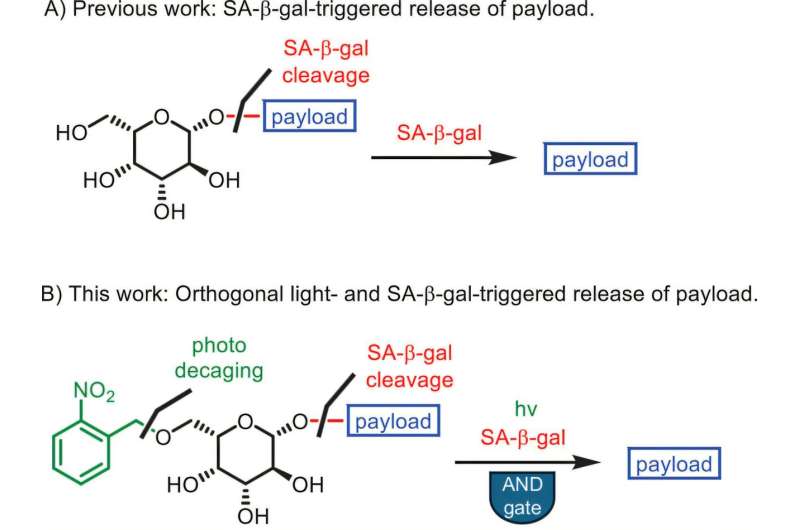
The problem researchers needed to address is that the enzyme commonly used to identify senescent cells also works in some non-senescent tissues, creating a risk of unwanted drug activation. And although light can control where a drug activates, using light alone could act on any cell within the illuminated area. Could a sequential light–enzyme switch combination improve selective targeting?
Mengyang Chang and colleagues at institutions including China’s Eastern Institute of Technology and Xinqiao Hospital developed experimental drugs with two molecular locks that are designed to be opened with the two keys: light and an enzyme. In laboratory tests, the combination made the drugs more selective about which cancer cells they killed. The findings are published in the journal Advanced Science.