
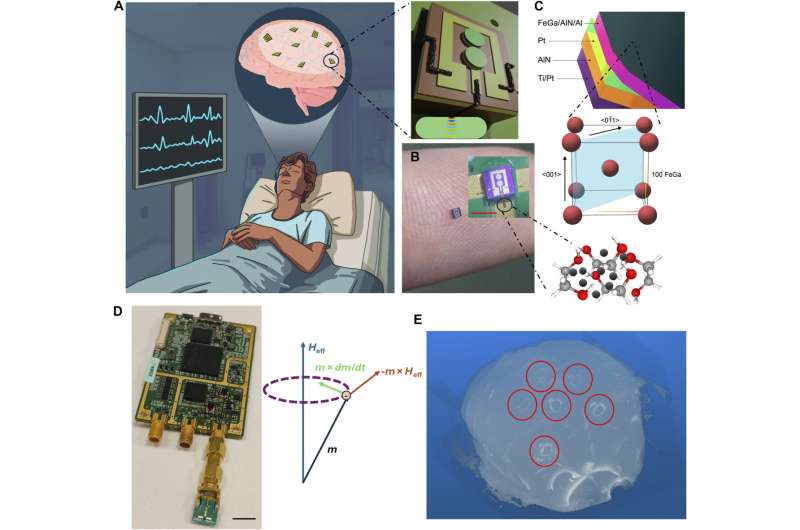
A breakthrough in biomedical engineering could help pave the way for tiny implantable devices capable of diagnosing, monitoring and treating a wide range of health conditions.
The prototypes, which they call µBots (pronounced “microbots”), are smaller, lighter, less power-hungry and produce less heat than many current implantable devices, which often rely on radio-frequency antennas to carry data.
Those devices tend to be bulky and generate significant heat, making them difficult to use comfortably as long-term implants and increasing the risk of infection at the implant site. The submillimeter-wide µBots instead combine acoustic and electromagnetic physics to create magnetoelectric antennas that are smaller, cooler and capable of carrying a much richer stream of data across a wide bandwidth.