
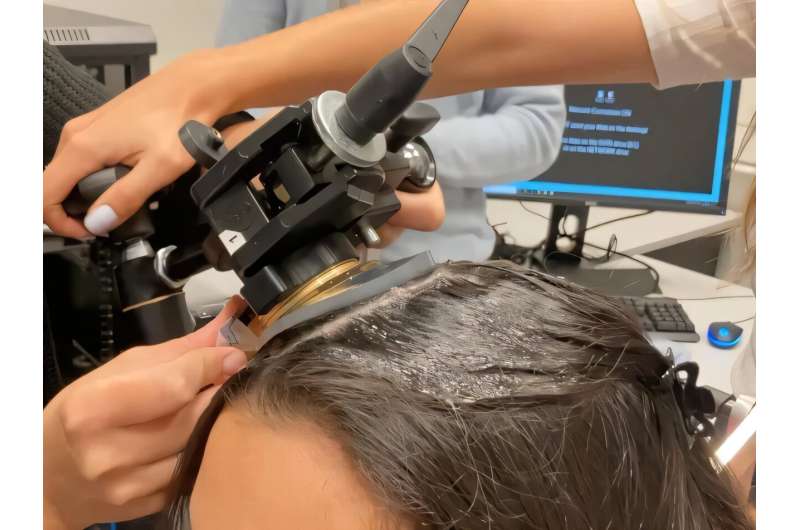
Farboud used a relatively new research method. A small speaker placed on the participants’ heads sent precisely targeted, inaudible sound vibrations into the brain. The technology resembles the ultrasound used to image babies in the womb. Her work shows that these vibrations can also be used to safely influence brain activity from the outside, without surgery.
For the study, now published in Nature Communications, participants played a computer game in which they had to look either left or right. Farboud directed ultrasound at the visual areas of the brain, giving them a subtle push. “When the eyes hesitated, ultrasound made the difference,” she explains. “We were able to adjust behavior within a fraction of a second, purely by stimulating the brain with ultrasonic vibrations.”