
Despite being preventable or treatable in many cases, bacterial infections kill an estimated 7.7 million people each year, resulting in one in eight deaths worldwide. With these numbers, it stands as the second-leading cause of death on the planet.
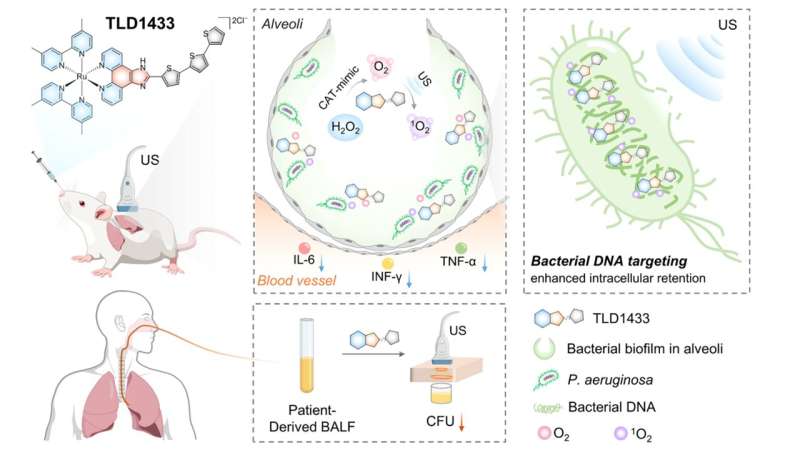
Deep infections are hard to treat because antibiotics and light-based therapies struggle to reach deep enough into tissue, are blocked by the protective biofilms bacteria form around them, and do not work well in low-oxygen environments.
By directing ultrasound at TLD1433, researchers in a recent study turned the drug into a DNA-targeting sonosensitizer that generates large amounts of oxygen species at the site of deep-seated, hypoxic bacterial infections, thereby disrupting vital bacterial functions and killing them.