
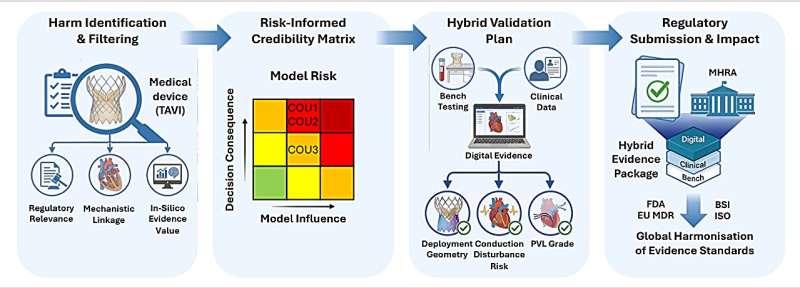
Published in the journal Device, the framework was developed by researchers from academia, industry and the Medicines and Healthcare products Regulatory Agency (MHRA), the U.K.’s regulator for medicines and medical devices. The work was carried out through the UK Centre of Excellence on In Silico Regulatory Science and Innovation (UK CEiRSI).
The framework sets out how computer simulations, known as in silico methods, can generate credible digital evidence for a specific regulatory decision: which questions they can appropriately inform, how much a decision relies on them and what evidence is needed to establish their credibility.