
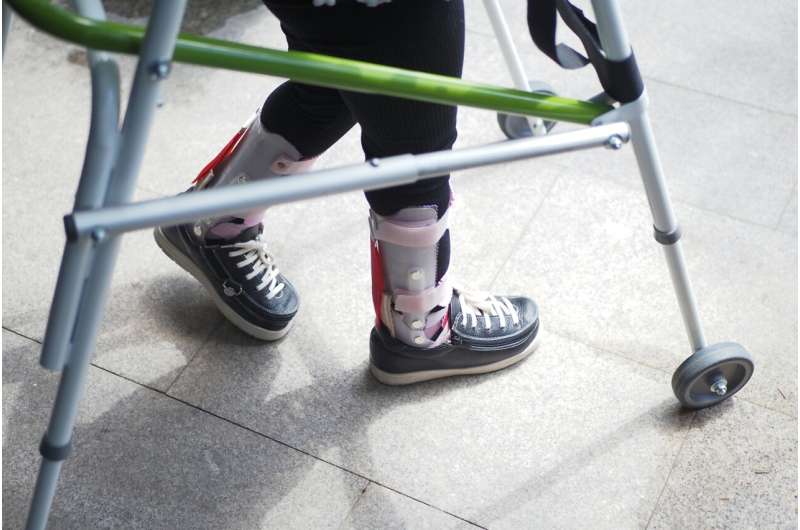
A lightweight robotic device that facilitates neuromuscular recovery in children with spinal muscular atrophy (SMA), helping them to stand unassisted, is published in Nature this week. Improved function persists after discontinuing training, demonstrating the potential for enduring recovery.
SMA is a neuromuscular disorder that affects the nerves and causes muscle weakness, which can limit movement in affected individuals. Symptoms can be managed with physical therapy, such as isokinetic resistance training, which uses speed-controlled exercises to improve strength. However, such training requires equipment that is only available at specialist institutions, and the devices used for this training are often too bulky and difficult for children to use.