
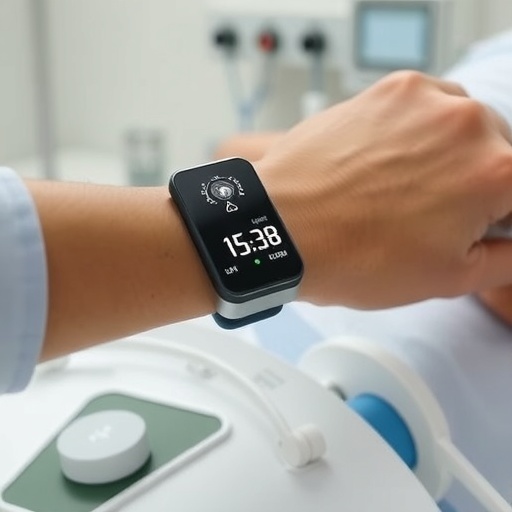
Successful initial patient tests suggest the system could become an alternative to arterial catheters and offer hospitals the ability to monitor arterial blood pressure beyond intensive care units. The sensors could also give people with hypertension a way to continuously monitor their health, like wearable glucose monitors for people with diabetes.
“Patients in the ICU need continuous blood pressure monitoring to catch problems early, but it means an arterial line, which comes with a risk of bleeding, clotting and infection,” said lead author Carl Harris, a Ph.D. student in biomedical engineering. “We wanted to find a better way.”
The findings are newly published in Computers in Biology and Medicine.