
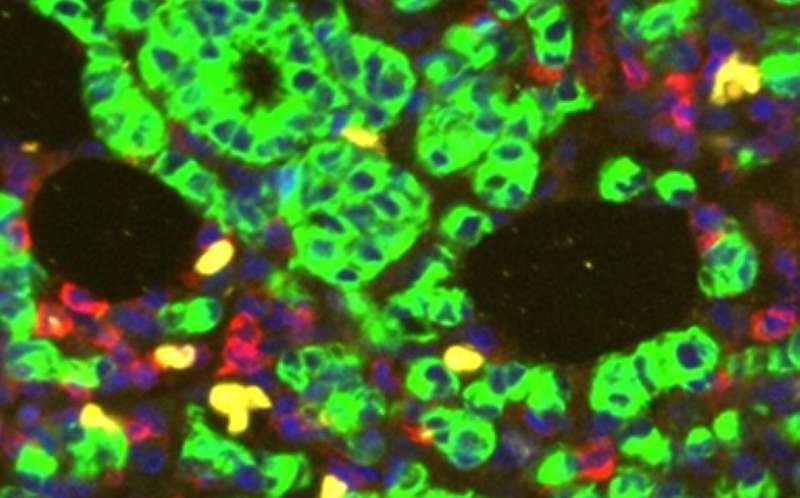
“Our findings on the role of the tumor immune microenvironment in endocrine resistance point to new therapeutic strategies to overcome resistance and improve outcomes for patients,” said Ariella Hanker, Ph.D., Associate Professor in the Harold C. Simmons Comprehensive Cancer Center and of Internal Medicine at UT Southwestern. Dr. Hanker co-led the study with Carlos L. Arteaga, M.D., Director of the Simmons Cancer Center and Associate Dean of Oncology Programs, and first author Fabiana Napolitano, M.D., Ph.D., a former member of the Arteaga Lab.
Nearly 80% of breast cancers are hormone receptor-positive and thus rely on estrogen to multiply and survive. Treatment of these cancers is typically based on depriving them of estrogen through various means, such as drugs that inhibit estrogen production. Although these therapies have significantly increased breast cancer survival, a subset of hormone receptor-positive cancers don’t respond, often leading them to recur after other treatments, including surgery and radiation.