
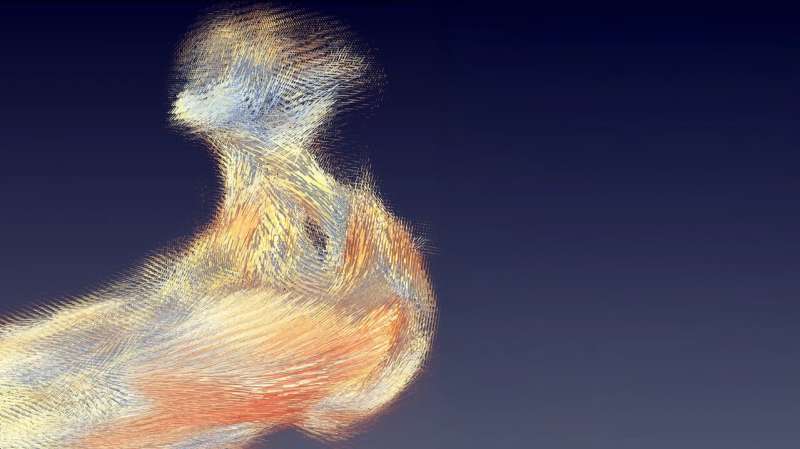
Biological materials are masterpieces created by nature. Bones, for example, are extremely hard, yet at the same time elastic enough to withstand lateral forces without breaking easily. This combination of properties results from their hierarchical structure as composite materials; they combine materials that have different structures on different scales. Human-made composite materials are similar in the way they are made up. In reinforced concrete, for example, the concrete component, consisting of cement and sand, can withstand high pressure, while a steel mesh provides high tensile strength and transverse stability.
Until now, examining such biological materials in detail has required the use of several different instruments, such as electron microscopes or classical light microscopes. However, scientists at the PSI Center for Photon Science have now refined an X-ray diffraction technique that was developed at the institute ten years ago, allowing it to be used to characterize materials on scales from nanometers to millimeters simultaneously and much faster than before. A complete scan now only takes about an hour, instead of a whole day.