
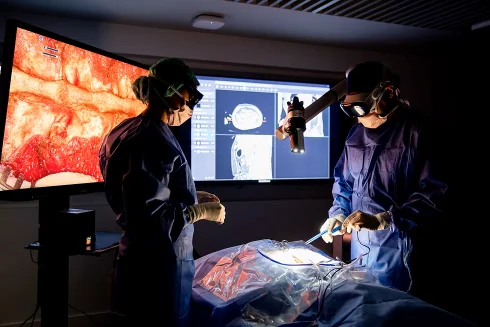
XRlabs, the Surgical Intelligence company, announced its technology was used to design patient-specific skull implants for the surgical separation of craniopagus twins, marking a world-first achievement in AI-designed patient-specific implants using extended reality technology.
The surgery was performed at PureHealth SEHA Sheikh Khalifa Medical City in Abu Dhabi in 2025 and led by Professor Noor ul Owase Jeelani, MBE, a UK-based pediatric neurosurgeon at Great Ormond Street Hospital (GOSH) and founder of UK charity Gemini Untwined. The twins, named Mercy and Goodness and born in Nigeria with fused skulls, intertwined brain tissue, and connected blood vessels, have since made full recoveries and returned home. Completed by Gemini Untwined, the procedure was the first successful craniopagus separation completed in the Middle East.
XRlabs’ platform played a pivotal role in the surgery, enabling surgeons to design implants within seconds by overlaying CT scan data as real-time 3D models in a mixed-reality environment and then translating those designs into the physical world. The underlying AI model was trained on similarly aged infant head shapes, ensuring the curvature of each implant matched normal developmental anatomy and removing the need for manual design.