
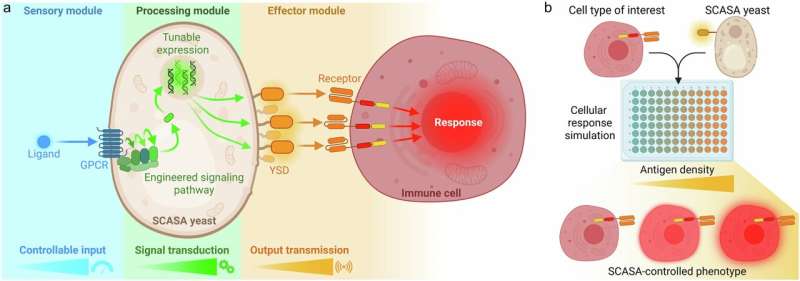
The study, published in Nature Communications, presents a so-called yeast surface display technology that uses modified yeast to mimic human cancer cells. The technology can examine how patients’ own immune cells, known as CAR T cells (Chimeric Antigen Receptor), respond to different cancer antigens.
“The most surprising thing for us was how accurately the engineered yeast cells could mimic real cancer cells. They activated CAR T cells almost as effectively as traditional cancer cell lines—and in some cases even more robustly. The combination of precision, speed, and extremely low costs means that we can now test new immunotherapies on a scale and at a speed that simply wasn’t possible before. I believe that this platform can help deliver safer and more targeted cancer treatments to cancer patients,” says Professor Sine Reker Hadrup from DTU Health Technology.