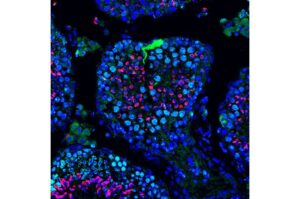
mRNA therapy restores fertility in genetically infertile mice
Researchers have found that targeted delivery of messenger RNA (mRNA) can restore sperm production and fertility in genetically infertile male mice.

Researchers have found that targeted delivery of messenger RNA (mRNA) can restore sperm production and fertility in genetically infertile male mice.

Findings from a study led by researchers at The Ohio State University Comprehensive Cancer Center–Arthur G. James Cancer Hospital and Richard J. Solove Research Institute (OSUCCC–James) support the potential of new therapies that could improve clinical outcomes for patients with squamous and adenocarcinoma non-small cell lung cancers (NSCLC) that don’t respond to immunotherapy.
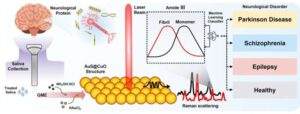
A team of Korean researchers has, for the first time, developed a technology capable of enabling early diagnosis of major neurological disorders including epilepsy, Parkinson’s disease, and schizophrenia using only a small amount of saliva
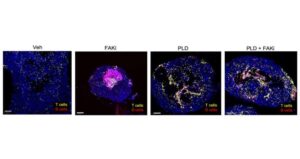
Scientists at Sanford Burnham Prebys and the University of California San Diego have published findings in Cell Reports demonstrating a treatment approach in mice that allowed more tumor-fighting cells to approach tumors.

Learn more about the advances in brain organoids and what this science could mean for the future.

Research reveals how cells may activate a compensation system that can reduce the effects of harmful genetic mutations. This could inform gene therapy development.

The FDA’s expanded clearances broaden the application of Bayer’s Medrad MRXperion system across a wider range of MR settings.
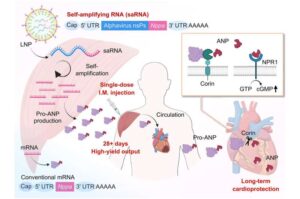
This simple injection may one day help people recover more safely and fully after a heart attack.

University of Pittsburgh School of Medicine researchers have developed an early-stage, experimental “living eye drop” that uses naturally occurring eye bacteria to support corneal wound healing.
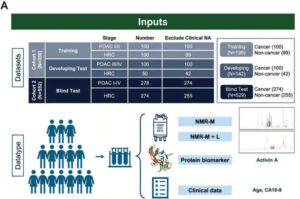
A team of researchers from Taiwan has developed PanMETAI, an AI-powered platform that analyzes metabolic fingerprints in a simple blood sample to detect pancreatic cancer at its earliest stages—when treatment is most effective—achieving up to 94% diagnostic accuracy.