
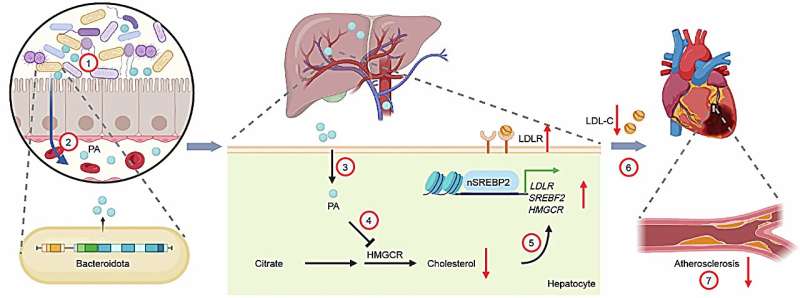
The molecule acts on the same enzyme targeted by statins, the widely used cholesterol-lowering drugs. That connection offers a concrete explanation for something harder to untangle: how bacteria living in the intestine might influence the health of arteries elsewhere in the body.
Researchers at institutions including Sun Yat-sen University and Shenzhen Bay Laboratory in China identified the substance as pentadecanoic acid. Their study, published in Nature, followed its effects from bacterial production to cholesterol clearance.