
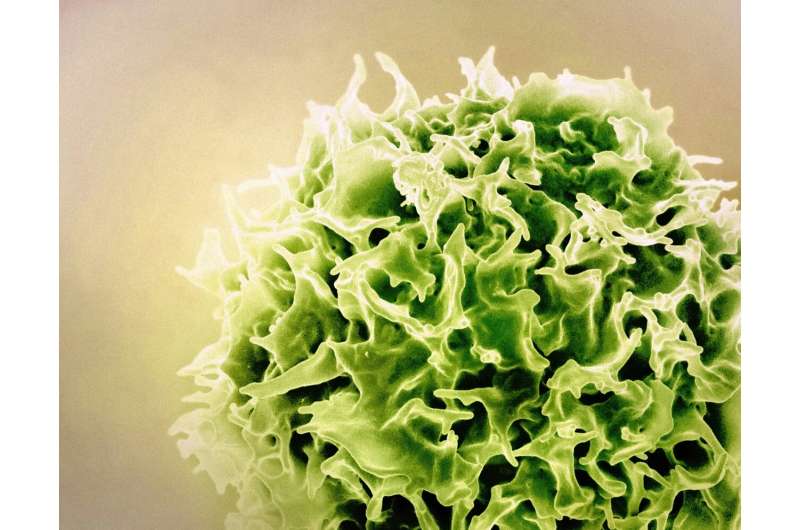
CAR-T cell therapy works well in blood cancers, but many patients still become resistant. A key reason is the presence of CAR-T regulatory T cells (CAR-Tregs), which weaken immune responses. Therefore, selectively targeting CAR-Tregs while preserving CAR-T activity remains a major challenge.
The team was led by Prof. Liu Qingsong at the Institute of Health and Medical Technology, Hefei Institutes of Physical Science, Chinese Academy of Sciences, in collaboration with Tongji University.
In this study, the researchers screened over 3,000 small molecules using a high-throughput platform. TAIII, a natural product derived from Anemarrhena asphodeloides, was identified as an effective regulator of T cell suppression. Further studies showed that TAIII blocks the adenosine A2A receptor, a key immune checkpoint, thereby reducing suppressive T cell activity.