
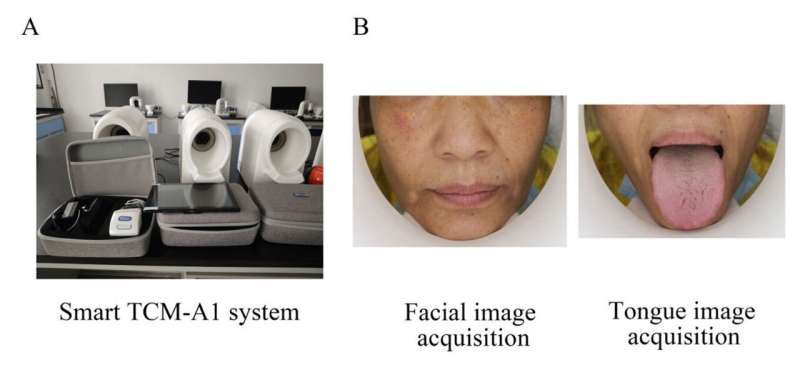
The researchers recruited 518 people: 200 with diagnosed CHD and 318 healthy volunteers. Each had their face and tongue photographed with a purpose-built scanning system. The pictures were analyzed using deep learning, a type of AI that learns to spot patterns in images.
The system examined the tongue and face photographs separately, then combined what each had picked up to predict who had CHD. Using both together performed better than either alone. The best-performing version was 98% accurate in a test of 104 people, correctly identifying all 40 patients with CHD, although two healthy participants were wrongly classified as having the condition—so-called “false positives.”