
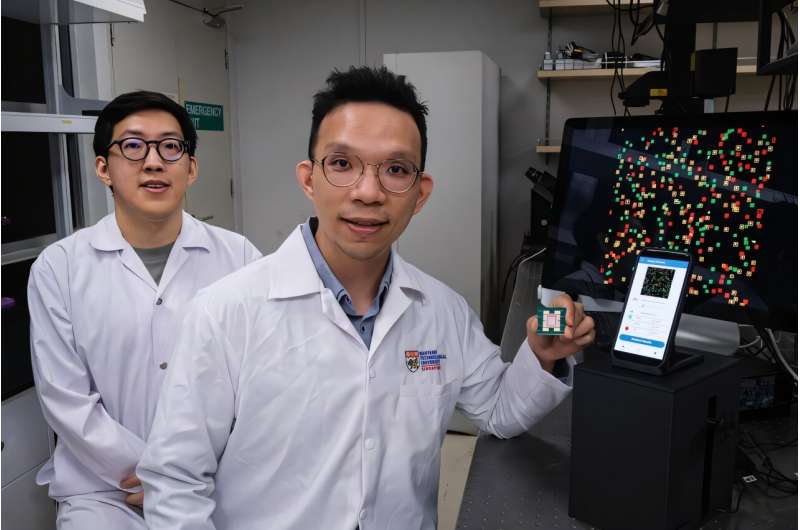
Compared with the current gold standard of detecting microRNA—PCR (polymerase chain reaction) detects tiny amounts of genetic material by copying them many times—the new device can cut detection time from hours to 20 minutes.
MicroRNAs are short RNA molecules that help regulate genes that work in the body. Because changes in microRNA levels are linked to many diseases, scientists have been studying them as possible biomarkers for conditions such as cardiovascular disease, cancer, neurodegenerative disorders and metabolic illnesses.
NTU Associate Professor Chen Yu-Cheng, who led the study at the School of Electrical and Electronic Engineering, said the team aims to build a system that can quickly and accurately measure multiple microRNAs, with the potential to detect biomarkers linked to a wide range of diseases.